Working Across Generations: How Communication Styles Shape the Workplace
A Baby Boomer picks up the phone. A Gen X employee sends an email. A Millennial starts a group chat. A Gen Z employee asks why the meeting couldn’t have been a message.
It’s a familiar workplace scenario—but these are tendencies, not rules. People of every generation have different preferences, and age alone does not determine how someone communicates.
Still, understanding the workplace experiences that shaped different generations can help us avoid misunderstandings and work better together.
Baby Boomers: Personal Connection and Conversation
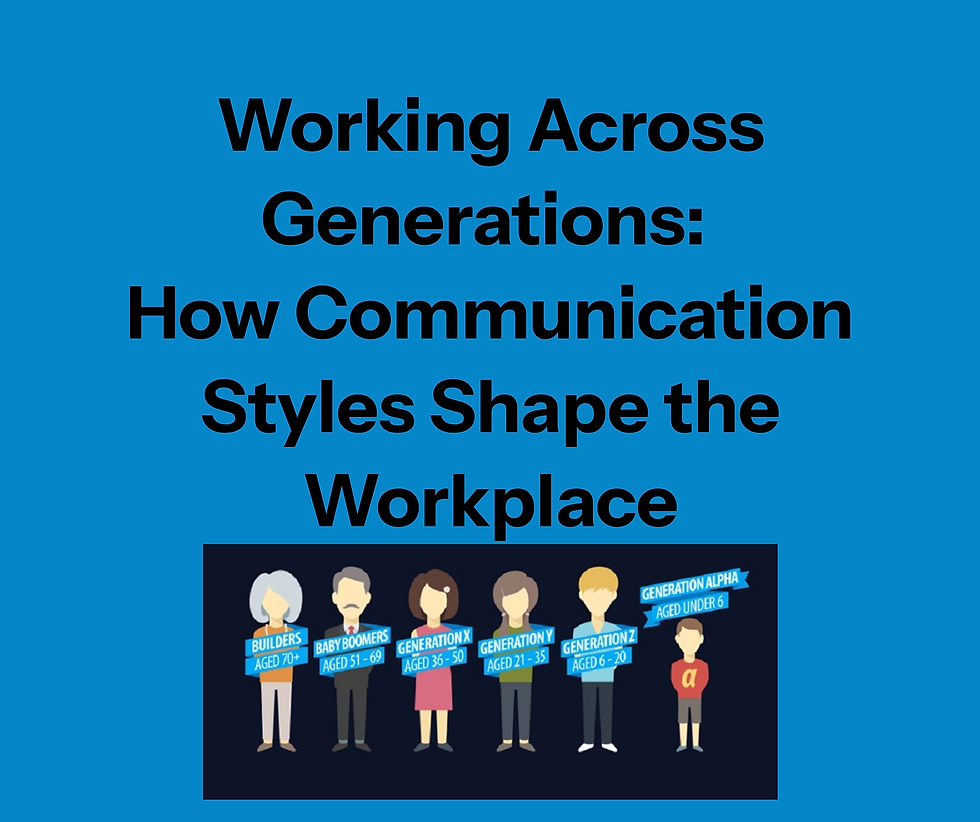
Baby Boomers are generally described as people born between 1946 and 1964. Many began their careers when workplace communication relied heavily on telephone calls, face-to-face conversations and printed documents.
Some may prefer discussing an issue directly, especially when it involves a sensitive topic or an important decision. A conversation can help build trust and provide an opportunity to ask questions.
Where misunderstandings can happen: A brief digital message may seem impersonal, while coworkers may see an unexpected phone call as an interruption.
Building the connection: Take time for a conversation when the situation calls for it, then provide a written summary of decisions and next steps.
Generation X: Clear, Practical and Independent
Generation X generally includes people born between 1965 and 1980. Many experienced the transition from largely paper-based workplaces to computers, email and digital systems.
Some Gen X employees may appreciate straightforward communication that explains the task, deadline and expected result, along with the freedom to get the work done independently.
Where misunderstandings can happen: Frequent check-ins may feel like micromanagement to someone who prefers independence. Meanwhile, a coworker who needs more guidance may interpret a hands-off approach as a lack of support.
Building the connection: Set clear expectations and agree on check-in points. Ask how much guidance is useful instead of assuming everyone needs the same level of support.
Millennials: Collaboration and Ongoing Feedback
Millennials are generally described as people born between 1981 and 1996. Many entered the workforce as internet access, mobile technology and collaborative digital tools became more common.
Some may value teamwork, regular feedback and understanding how their work contributes to a larger goal. They may be comfortable moving between email, messaging, video calls and in-person conversations.
Where misunderstandings can happen: Asking for feedback may be interpreted as needing reassurance, when the employee is looking for direction or professional growth. Collaborative discussions may also feel time-consuming to someone who prefers a quick decision.
Building the connection: Explain the purpose behind assignments, provide useful feedback and make it clear when a task needs group input or individual action.
Generation Z: Digital Communication and Clear Expectations
Generation Z generally includes people born between 1997 and 2012, with older members now in the workforce. Many grew up with smartphones, social media and instant access to information.
Some may prefer concise messages and accessible digital tools. However, being comfortable with technology does not automatically mean being familiar with workplace email etiquette, telephone conversations or an employer’s communication systems.
Where misunderstandings can happen: An informal message may seem unprofessional to a coworker who expects a more formal tone. A new employee may also hesitate to ask questions if they are unsure how or when to approach a supervisor.
Building the connection: Explain communication expectations during onboarding. Provide examples, welcome questions and offer support as employees develop workplace skills.
When Different Styles Meet
Imagine a supervisor emails detailed instructions, a coworker adds an update in a group chat, and another employee changes the plan during a hallway conversation.
The problem is bigger than anyone’s preferred communication style: the team no longer has one clear version of the plan.
Differences can also affect how people interpret respect. One employee shows respect by being brief and avoiding interruptions. Another shows respect by taking time to talk. Both may have good intentions, yet each can misunderstand the other.
Making Communication Work for Everyone
A workplace does not need a separate communication system for every generation. It needs shared expectations and room for individual preferences.
Match the method to the task. Use a conversation for sensitive or complicated issues and written communication for instructions, deadlines and records.
Explain urgency. Include a clear deadline instead of assuming everyone knows how quickly to respond.
Ask about preferences. “Would you prefer to discuss this or review it by email?” is more useful than guessing based on age.
Share knowledge in both directions. Employees can exchange technical skills, workplace experience and approaches to customer service.
Avoid generational labels as criticism. Describing someone as “too old-fashioned” or “always on their phone” closes the door to understanding.
Different Experiences, Stronger Teams
Every generation brings valuable experience to the workplace. Communication improves when we recognize those differences without turning them into stereotypes.
Whether you are a Baby Boomer, Gen X employee, Millennial or member of Gen Z, the goal is the same: to understand others, be understood and get the work done together.